Flagship Guide
The Master Guide to GEO
Generative Engine Optimisation | By Adam Parker | Updated April 2026
Generative Engine Optimisation (GEO) is the practice of getting businesses recommended in AI-generated answers. It is the AI equivalent of SEO - but the rules are fundamentally different.
What Is GEO?
GEO stands for Generative Engine Optimisation. It describes the work of optimising businesses to appear in AI-generated answers across platforms like ChatGPT, Claude, Gemini, Perplexity, Copilot and Google AI Overviews.
The term emerged in 2024-2025 as AI search grew from a novelty to a significant discovery channel. Other terms for the same work include AI SEO, AIO (AI Optimisation), and AI search visibility. At Rank4AI, we use "AI search visibility" because it describes the outcome most clearly.
How GEO Differs from SEO
SEO optimises web pages to rank in search engine results. GEO optimises business entities to be recommended in AI-generated answers. The distinction matters because the underlying mechanisms are different.
In SEO, you compete for positions on a results page. In GEO, you compete for inclusion in a single answer. There is no page 2 in AI search. Either your business is mentioned or it is not.
SEO signals include backlinks, keyword relevance, and content quality. GEO signals include entity clarity, ecosystem presence, trust indicators, and consistency across multiple independent sources.
The overlap between strong Google rankings and AI recommendations is consistently low in our testing. Businesses on page one of Google are regularly absent from AI answers entirely.
The GEO Framework
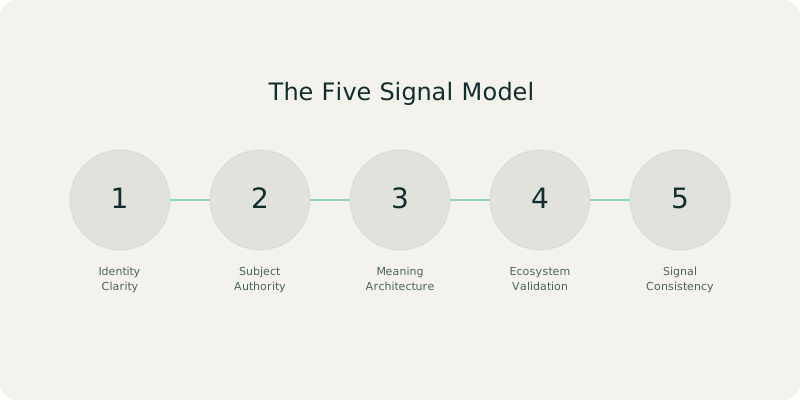
Effective GEO is built on five signal layers that AI systems use to evaluate whether to recommend a business. We call these the Five Signal Model:
- Identity Clarity - can AI describe your business in one consistent sentence?
- Subject Authority - does AI associate you with specific expertise?
- Meaning Architecture - can AI read your website structure reliably?
- Ecosystem Validation - do independent sources confirm what your site says?
- Signal Consistency - has your positioning been stable over time?
How to Do GEO
GEO work falls into three categories:
1. Technical Signal Engineering
Making sure AI systems can find, crawl and correctly read your website. This includes: ensuring AI crawlers (GPTBot, ClaudeBot, PerplexityBot, Google-Extended) are not blocked in robots.txt, submitting your site to Bing (required for ChatGPT visibility), implementing structured data (Organisation schema, FAQ schema), and setting up llms.txt.
2. Authority Architecture
Structuring your content so AI can interpret what your business does and cite it with confidence. This means: clear service definitions, structured expertise content, answers to the questions your customers ask, and a content hierarchy that signals specialisation.
3. Ecosystem Signal Reinforcement
Building the external signals that confirm your business independently. This is where most GEO effort goes: directories, review platforms, professional listings, editorial mentions, PR citations, social profiles, podcast appearances, and community presence. Each independent source that says the same thing about your business increases AI confidence.
GEO Results Timeline
GEO is not instant. It compounds over time:
- Months 1-2: Technical foundations in place. AI crawlers have access. Ecosystem building begins.
- Months 2-4: First AI appearances. Citations begin across platforms.
- Months 4-8: Consistent coverage across all six platforms. Recommendation likelihood increasing.
- 8+ months: Self-reinforcing. Very difficult for competitors to displace.
GEO vs SEO - Do You Need Both?
Yes. SEO drives traffic through Google rankings. GEO drives recommendations through AI platforms. They serve different purposes but much of the work overlaps. Clear entity definition, structured content, and consistent presence benefit both systems.
For the full comparison, see our GEO vs SEO guide.
Getting Started with GEO
Every GEO engagement should start with an audit. Without knowing where you currently stand across all six AI platforms, you cannot prioritise effectively. Our AI Search Visibility Audit tests all five signal layers across ChatGPT, Claude, Gemini, Perplexity, Copilot and Google AI.