AI SEO vs traditional SEO
By Adam Parker | Rank4AI
Key Point
Traditional SEO often optimises for a results page. AI SEO optimises for an answer.
| Area | SEO | AI Visibility |
|---|---|---|
| Primary goal | Rank pages for keywords | Be included and recommended in AI answers |
| Key focus | Keywords, links, technical health | Identity clarity, extractable structure, corroboration |
| Best content format | Long form pages and topic coverage | Compressed answers, tables and evidence blocks |
| Trust signals | Authority sites linking to you | Ecosystem validation and neutral corroboration |
| Measurement | Rank, traffic, clicks | Inclusion rate, citation frequency, stability |
Frequently asked questions
Does strong SEO guarantee AI inclusion?
No. There is overlap, but AI systems do not rank pages in isolation. Interpretation and corroboration matter, so strong SEO alone does not guarantee inclusion in AI answers.
Should businesses stop doing SEO?
Not usually. Many businesses benefit from doing both, while keeping the goals separate: SEO targets ranking, and AI visibility targets being interpreted, trusted and recommended.
What is the biggest shift to make?
Traditional SEO often optimises for a results page, while AI SEO optimises for an answer. Move toward compressed answers, extractable structure and corroboration.
What are the five signals of AI visibility?
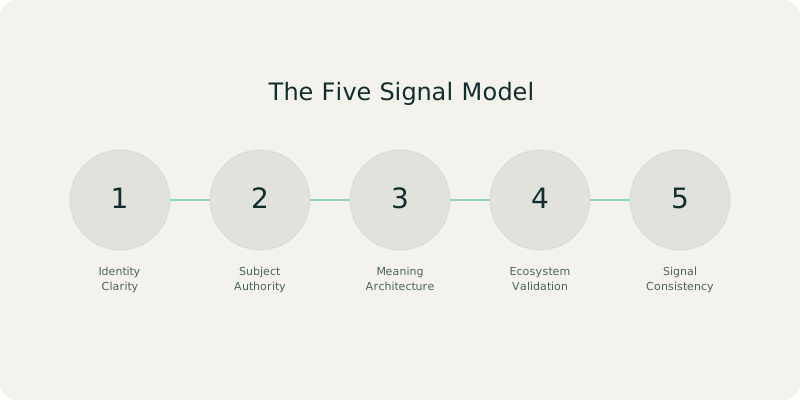
Rank4AI uses a five signal model: Identity Clarity, Subject Authority, Meaning Architecture, Ecosystem Validation and Signal Consistency.
How Rank4AI helps
We test your business across ChatGPT, Claude, Gemini, Perplexity, Copilot and Google AI. We find the gaps and build the signals that get you recommended. Over 1,400 UK businesses audited.
Start with a free audit to see where you stand across all six platforms.
Adam Parker
AI Search Visibility Specialist
Adam is the founder of Rank4AI, specialising in AI search visibility. He helps businesses get found across ChatGPT, Gemini, Perplexity, and AI Overviews through technical optimisation and strategic content.
Last reviewed: 28 September 2026